
Shopify Store Setup Guide: From Zero to Global Sales
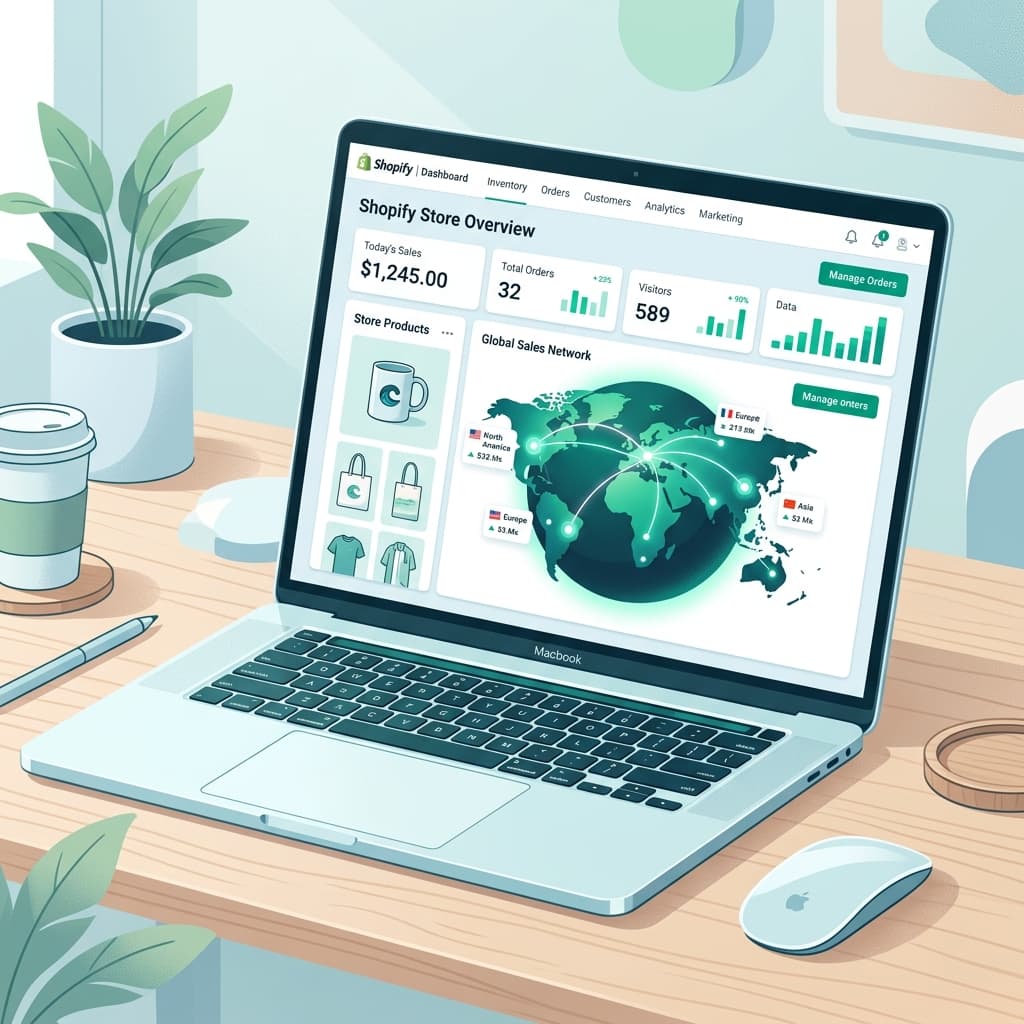
Etsy and Amazon are powerful marketplaces, but there the customer belongs to the platform, not to you. Shopify lets you build a store that is entirely yours: your brand, your customer list, your rules. Starting on marketplaces and then building a brand on Shopify is the path most serious e-exporters follow. The good news: you can have a store ready to sell in a day, without technical knowledge.
1. Account and domain
Start with Shopify's free trial and make your first task getting a professional domain. Using yourbrand.com instead of yourbrand.myshopify.com builds trust and instantly lifts how your brand is perceived. Keep the domain short, memorable and easy to pronounce in English, because your audience is in the US and Europe.
2. Theme and design
Free themes such as Dawn are more than enough to start. When choosing a theme, focus on speed and simplicity rather than visual effects. Always check the mobile view: most sales come from phones. Make the theme your own with your logo, brand colours and consistent typography. Avoid clutter; white space sells better than a crowded page.
3. Set up products and print-on-demand
This is where Igora comes in. If you are selling without stock, connect your print-on-demand setup to Shopify instead of adding products by hand, so that production and shipping start automatically when an order arrives. For each product use a clear title, a benefit-led description and high-quality mockups. In the description, describe the result the customer gets, not just the features.
On a marketplace you are a tenant; in your own store you are the owner. Building a brand means you stop paying rent and start owning the property.
4. Payments and shipping
Shopify Payments is not available in every country. If you sell from Turkey, settle how you will collect international payments through Stripe, PayPal or another provider. On shipping, if you sell without stock, state the production and delivery time clearly on the product page. Managing expectations is the strongest defence against negative reviews.
5. Checklist before launch
- About, Contact, Shipping & Delivery, Returns and Privacy pages are published. These affect both customer trust and payment provider approval.
- A test order has been placed and the whole flow checked: cart, checkout, confirmation email and order notification.
- Product pages show realistic delivery times.
Your Shopify store is your brand's headquarters online. Marketplaces bring you the first customer; Shopify is where you turn that customer into a loyal fan. Build a simple store that works, then improve it step by step based on traffic and data. A perfect store that never opens is always worse than an average one that sells.
Igora Team
Igora Editorial Team
The Igora team brings together e-commerce experts, logistics specialists and AI developers with a mission to make international trade accessible for Turkish entrepreneurs.
Start Selling Globally Without Upfront Inventory
Take your brand to global markets with Igora's AI-powered stockless e-export ecosystem.
Explore Services →